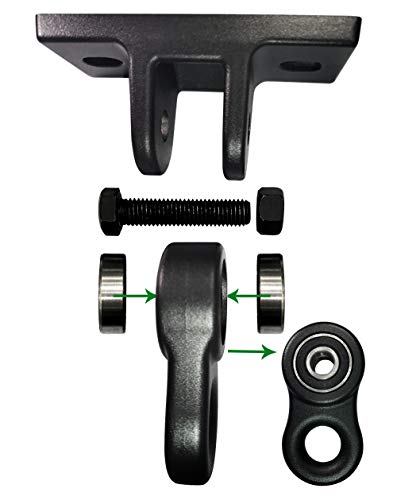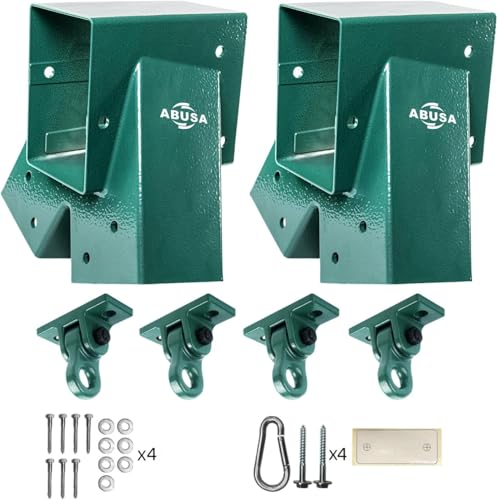
Green A frame brackets with four hangers
$69.98
Rated 4.1 of 5585 ratings on the listing

Pilot sizes, penetration, and the order of operations that keeps a bracket from cracking.
The length you need is the stack of everything the bolt passes through, plus the nut, plus a couple of turns of thread. For a lag it is different: there the number that matters is how deep the thread bites, and the published rule is at least three quarters of the beam thickness.
Measure the stack with a tape rather than adding up what the timber is called. A four by six is not six inches deep, and a bolt bought against the nominal size arrives short by more than you would guess. If you are between two lengths, the longer one costs nothing to live with as long as the thread standing past the nut is a couple of turns and not an inch of shin height steel.
Three sixteenths of an inch for a pilot under a lag, per Grimmett. A quarter inch pilot with a five sixteenths working hole, per Eastern Jungle Gym. Seven sixteenths for a bolt clearance hole. Half an inch straight through where a commercial hanger takes a carriage bolt.
These are not interchangeable and the right one depends on your fastener, not on your drill index. Take the fastener to the bit and match it before the ladder comes out.
Our A frame brackets go on in a particular order and doing it out of order is the main way people damage one. Assemble the top beam first, then the four legs. Slide the lumber through the bracket rather than driving it in. Drill the holes with an electric drill while everything is lying on the grass. Then run the bolts and washers with a plain wrench.
The brackets are cast for dry lumber. Wood that is still wet from the yard is oversized and swollen, and forcing it into the casting is how a bracket cracks. Let it dry, or buy dry.
Fit the hangers while the beam is on the ground, teeth up, which is the reverse of how they will sit in service. It is easier, it is squarer, and you can put your weight behind the drill. Commercial hangers with anti rotation teeth get seated with a rubber mallet before the fastener goes in.
Mark both hangers off one end of the beam rather than measuring the second from the first, because a small error measured twice becomes a swing that hangs crooked. Square the mark across the face with a speed square while the beam is flat, and drill from the marked face so any wander in the bit shows up on the side nobody sees.
When you are done, look at the back of each nut. No more than two turns of thread should be standing past it. Every fastener should have a washer under it. Nothing should be tightened to the end of your strength. Then walk the whole frame once and put a hand on each joint.
Rated 4.1 of 5585 ratings on the listing
Rated 4.7 of 57,298 ratings on the listing