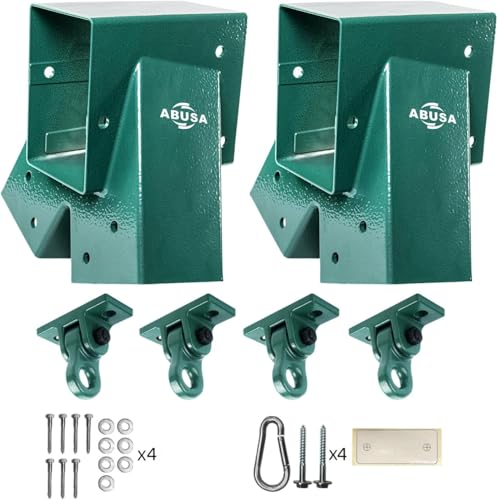
Black swing hangers
from $18.97
Rated 4.7 of 57,298 ratings on the listing

Bearings, bushings, corrosion, and the difference between an annoying noise and a worn part.
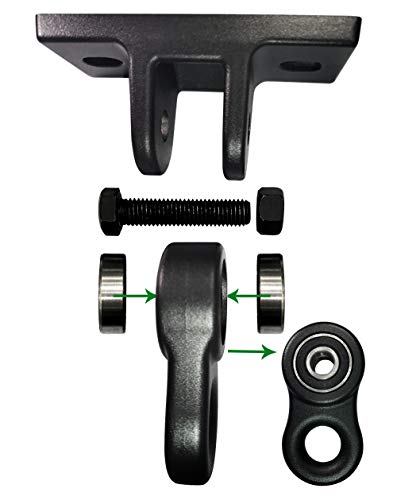
A swing hanger has to let a load rotate through a small arc, thousands of times, outdoors, without attention. There are three common answers. A sealed ball bearing, usually in stainless, which is sold on being quiet. An oil impregnated bronze bushing, which is on commercial clevis pendulums and needs no lubrication at all. A nylon bushing, which is quieter still and has less friction than metal on metal.
None of them is the correct one. They are three different trades between noise, cost and how much you want to think about it later. Ours is a sealed bearing, because the complaint we hear most is noise.
An ordinary seat that goes back and forth lives happily on a fixed hanger. Anything that is meant to spin, a disc or a tire, needs a real swivel. This is not a preference. A fixed hanger with something spinning under it winds the chain, and the wind up comes out all at once.
Published guidance adds that a multi axis swing should not share a bay with other swings and wants noticeably more room around it.
Squeaking is the most common complaint in this niche and also the easiest fix. On a bushing type pendulum the worn part is a consumable: you replace it along with a fresh axle bolt and lock nut, and grease it now and then. On a bearing type, a noise that has become rough rather than merely audible is the first sign the bearing itself is going.
For scale, a commercial hanger in daily use is expected to run eight to twelve years. A backyard one does far less work than that, which is why the thing that usually kills it is weather rather than mileage.
The published order for outdoor hardware is stainless in the three hundred series, hot dip galvanizing, or powder coat. Electroplated zinc, the bright silver finish on cheap hardware, is only acceptable under a roof. Ductile iron with brass bushings is the top of the commercial shelf.
What we cast is an aluminum alloy with the underside hardened, painted, and made in one piece with no welded joints and no soldered seams. Aluminum does not rust the way steel does, but the fastener going through it usually is steel, so the fastener is the part to watch.
Sound that changed suddenly. Sound that comes with movement you can see at the mount. Grinding rather than squeaking. Any of those means take the seat down and look at the joint before anyone gets back on. A squeak that has been the same squeak for two years is telling you something much duller.
Rated 4.7 of 57,298 ratings on the listing
Rated 4.1 of 5585 ratings on the listing