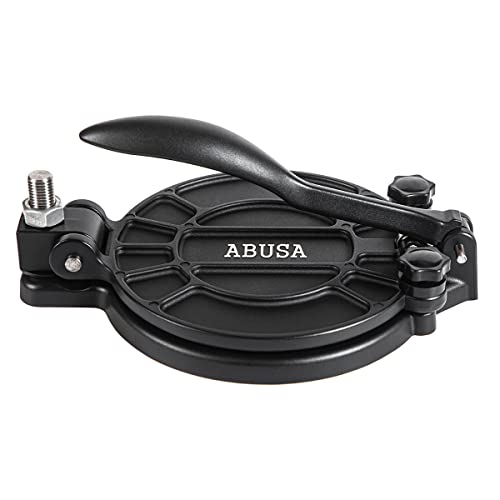
Black 8 inch adjustable tortilla press
$56.99
Rated 4.1 of 5839 ratings on the listing

Eight inch or ten, corn or wheat, and the small habits that decide whether the dough comes off the plate.
Eight inches is street taco size, tostadas, small flatbreads, and it takes less counter and less storage. Ten gives you full size tortillas, wraps and quesadilla rounds, and it is heavier to lift down from a shelf.
Most kitchens are happier with eight than they expect to be. Ten earns itself if you are feeding a table rather than a couple of people.
Cut a zip bag down the sides so it opens into two flat sheets, and press the dough between them. This is the single habit that separates a press that works from a press that gets put away in irritation. Plastic wrap tears, parchment creases, and a cut bag does neither.
Season nothing and oil nothing on the plates. The sheets are what keeps the dough off the iron.
Roll the dough into balls about an inch and a quarter across. Put the ball slightly toward the hinge rather than dead center, because the plate closes in an arc and the far side gets less pressure.
Press, open, turn the round ninety degrees, and press again. Two passes at a right angle give you an even thickness where one pass gives you a wedge.
Wheat dough fights back. Hold the press closed for four or five seconds, open it, turn the round about forty five degrees, and repeat, because gluten pulls the round back in as soon as the pressure comes off. Corn masa has no gluten and needs none of this.
Thirty to forty seconds a side on a dry hot pan is the usual figure, and the tortilla tells you when it is ready by lifting at the edge. If it is sticking, the pan was not hot enough when it went in.
The thickness adjustment on the press is worth a few minutes of playing with once, at the start, rather than fighting every batch afterwards.
Work in a line: press one, cook it, press the next while the first is on the heat. Rounds that sit around waiting go dry at the rim and crack when they are folded. Stack the cooked ones under a clean towel, where they steam each other soft, and that is also how they stay warm to the table.
Wipe the plates dry after use, or with a lightly oiled cloth. If something baked on, wash it warm with a brush and dry it immediately, all the way, and put a thin film of oil on the plates.
Never let it air dry and never put it in a dishwasher. Store it dry and closed. That is the entire maintenance routine, and doing it takes less time than reading about it.
Rated 4.1 of 5839 ratings on the listing